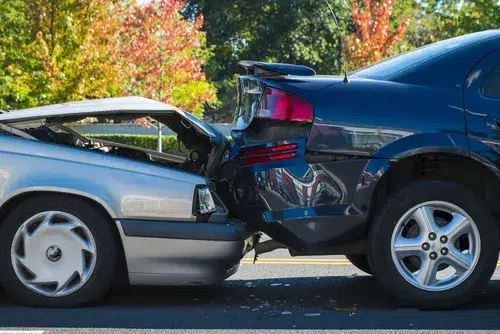
You notice the drift before you feel the hit. A car two lanes over glides toward yours with that subtle, unnerving sway that means the driver isn’t watching the road. Maybe there’s a phone at the steering wheel level, a coffee cup, a glowing dashboard, a toddler tossing crackers. A moment later, metal folds and plastic shatters. It’s over fast, but the aftermath stretches for months. This is the landscape where decisions matter, and where calling an experienced car accident lawyer can shape not only your claim, but your recovery.
Why distraction changes everything
Distracted driving isn’t a single act, it’s a category of divided attention that alters how fault and damages are proved. Texting, GPS entry, scrolling playlists, eating, arguing with a passenger, chasing a bee from the dashboard, reaching for a water bottle, even daydreaming. Courts and insurers care about distraction because it goes to breach of duty. If you were rear-ended at a red light and the other driver was on TikTok, that’s not just negligence, that’s negligence with evidence.
From a practical standpoint, proving distraction demands more than a photo of a cracked bumper. It turns on cell phone logs, infotainment metadata, dashcam footage, vehicle event data recorders, witnesses who saw a glowing screen, and sometimes point-of-sale time stamps from the drive-thru bag on the passenger seat. These sources evaporate quickly. Phones get wiped, accounts switch devices, businesses overwrite surveillance after 7, 14, or 30 days. The faster you involve counsel, the faster preservation letters go out and records get locked down.
The first hours: choices that protect your claim
The scene after a crash is noisy. Tow trucks, flashing lights, polite but hurried officers, drivers who want to keep it “between us.” Resist the urge to streamline. Call the police, wait for a formal report, and give a clear, factual statement. Photographs help: positions of vehicles, skid marks, the other car’s cabin if visible, particularly anything that suggests distraction, like a phone unlocked on a messaging screen. If the other driver blurts out, “I was just looking at a text,” note it verbatim and give that detail to the responding officer.
Your body will argue for adrenaline over accuracy. Go to urgent care or an ER even if you think you’re fine. Whiplash and concussions often manifest over 24 to 72 hours. Insurers later seize on gaps in treatment to minimize a car accident injury. Document every symptom, however small: headaches, brain fog, light sensitivity, numbness in fingers, ankle tightness. If a CT, MRI, or X‑ray is recommended, get it. Objective imaging changes how adjusters value a claim.
Then, before the week is out, speak with an injury lawyer who regularly handles distracted driving cases. You are not committing to litigation by making a call. You are protecting evidence and learning the terrain.
The legal stakes: negligence with a digital footprint
A distracted driver crash lives at the intersection of human behavior and digital proof. In many states, using a handheld device while driving is illegal. That statutory violation is sometimes negligence per se, which streamlines liability if the violation caused the crash. Even where the statute is less strict, a pattern of distraction can be devastating for the defense.
Experienced counsel moves early to secure:
- A preservation letter to the at-fault driver and their carrier, instructing them not to delete or alter phone data, vehicle infotainment logs, and event data recorder information. Subpoenas to cell carriers for call and text logs that bracket the moment of impact. Content is harder to get than timestamps, but timestamps alone can support an inference.
When the facts warrant it, lawyers add requests to local businesses for camera footage, to rideshare platforms if a rideshare vehicle was involved, and to municipal agencies for traffic cam video. On high-end vehicles, infotainment systems may retain call history, Bluetooth connection times, and navigation entries. If a car is deemed a total loss and sent to auction, that data can be gone within days. Speed matters.
Medical proof: the backbone of value
Insurance companies don’t pay sympathy. They pay verified damages. For a car accident injury, value begins with diagnosis, is sustained by consistent treatment, and is supported by narrative medical opinions that connect the dots. Take a shoulder labrum tear. It can be explained away as degenerative unless a radiologist is willing to anchor it to the acute mechanism of injury, and an orthopedic surgeon documents functional loss in concrete terms: reduced abduction degrees, loss of strength, impact on daily activities like dressing or lifting a child.
Prompt referrals matter. Physical therapy started within two weeks carries more weight than therapy started after a month of stoic silence. If symptoms persist beyond 90 days, ask your treating physician whether a specialist or pain management consult is appropriate. A mild traumatic brain injury often needs neuropsychological testing to pick up cognitive deficits that don’t appear on imaging. The right test, at the right time, makes the difference between a nuisance offer and a settlement that respects your recovery horizon.
When to pick up the phone to a car accident lawyer
Contact an accident lawyer as soon as you suspect the other driver was distracted, and certainly if any of the following are true:
- You have visible injuries, significant pain, or lingering symptoms beyond 48 hours. Liability is contested or the police report is incomplete, incorrect, or neutral. There are hints of phone use or other distraction that require fast preservation. The insurer reaches out with a quick settlement offer before you finish treatment. You missed work or anticipate missed work, or you care for someone who relies on your income.
These are the moments where self-advocacy meets its limits. An injury lawyer does more than send a demand. They sequence your claim so that records arrive in a coherent, persuasive stack: imaging, specialist notes, wage verification, function reports, and a life impact statement that reads as human, not theatrical.
The insurance choreography: a high-gloss dance, not a brawl
After a car accident, two adjusters often appear: one for property damage, one for bodily injury. They are cordial, efficient, and trained to elicit statements that narrow your claim. When an adjuster asks how you’re doing, any answer beyond “I’m following my doctor’s advice” is recorded, summarized, and potentially quoted against you. If you already gave a statement, don’t panic. A lawyer can contextualize it and emphasize that early reports preceded full medical workup.
Expect the first offer to reflect a fraction of your eventual value if you claim early. Value grows with documented treatment duration, documented disruption to life, and time from injury. That time factor is not a trick, it’s the reality of how the industry assesses harm. A three-week sprain is worth less than a six-month recovery with residual pain. The challenge is balancing patience with the need to pay bills. This is where medical payments coverage, health insurance, and sometimes letters of protection support cash flow while a case matures.
Fault, shared fault, and how percentages change outcomes
Not every crash has a clean villain. Maybe the other driver drifted while glancing at a text, and you were accelerating slightly over the limit. Comparative negligence rules vary by state. In a pure comparative state, your damages reduce by your percentage of fault. In a 51 percent bar state, crossing the majority line ends recovery entirely. Skilled counsel isn’t just about proving the other driver was distracted, but about guarding your share of the pie against inflation by the defense.
Details that affect fault allocation include speed analysis from event data, brake application timing, visibility, road design, and whether the distraction was continuous or momentary. Jurors see nuance. A driver scrolling social media for several blocks reads differently from a driver who glanced at a buzzing phone and immediately looked back to the road. If the defense can reframe continuous distraction as a fleeting glance, your lawyer needs to pull time-stamped proof back into focus.
Evidence that tends to move numbers
Seasoned adjusters don’t fall for theatrics. They respond to credible, consistent artifacts. Photos of your car, yes, but more importantly, repair estimates, parts lists, and post-repair diminished value reports in the right markets. For bodily injury, imaging with radiologist narratives carries weight, but so do contemporaneous pain journals that never stray into exaggeration. A calendar of missed family events tells a story more honestly than a sweeping paragraph about lost joy.
If the other driver was working at the time, employer policies on device use matter. A company’s ban on handheld phones combined with proof of violation can open up negligent entrustment or supervision angles, and commercial policies carry higher limits. A rideshare driver car accident compensation who toggled between apps seconds before a crash may bring the platform into focus depending on the state and stage of the ride. These are the layers that a car accident lawyer explores quickly, before memories and data fade.
Settlements, litigation, and the quiet power of readiness
The vast majority of car accident claims settle. Not because trials are unwinnable, but because litigation is expensive and unpredictable for both sides. Paradoxically, cases settle best when they are trial-ready. A lawyer who has lined up treating physicians, retained credible experts sparingly, and honed a clear narrative forces the other side to price risk accurately.
Filing suit can unlock discovery tools that informal settlement talks lack. With a filed case, you can compel production of phone records, depose the at-fault driver about habits and training, and demand inspection of the vehicle’s data systems. The act of filing does not guarantee trial; it signals seriousness and opens the gate to evidence that allows your claim to mature.
Timing and statutes that do not forgive
Every state has a statute of limitations. In some, personal injury claims must be filed within two years, in others within three. Claims against government entities compress even further, sometimes into notice periods of 90 or 180 days. Do not assume. Ask. Early engagement with an injury lawyer lets you plan treatment while keeping deadlines in sight. A missed statute is a locked door.
There is also a quieter deadline: the preservation of electronic evidence. Cell carriers maintain certain logs for limited periods. Some data on phones and infotainment systems cycles out as new entries overwrite old ones. Businesses purge camera footage on a schedule. Your case gains leverage when preservation letters go out in the first days, not the final weeks before filing.
Pain, suffering, and the art of quantifying the unquantifiable
Non-economic damages are often misunderstood. They are not “whatever you say you went through.” They are anchored to how long you were in treatment, how invasive that treatment was, how credible your complaints remain over time, and whether your life changed in tangible ways. A marathoner who can no longer run under an eight-minute mile is not merely inconvenienced, they have lost a part of their identity. A violin teacher with residual tremor after a wrist fracture has a daily reminder of harm. Those specifics convert abstract suffering into something a claims committee can understand.
The tone and content of your own communications matter. Texts to family that say “headache again, canceled lesson” are more persuasive than a dramatic letter written months later. Social media posts cut both ways. If you are smiling at a barbecue, the adjuster will never read the caption about leaving early due to pain. Silence online during recovery is not paranoia, it is prudence.
Property damage and the overlooked claim for diminished value
When a new or luxury vehicle takes a hard hit, Carfax and similar databases attach a stigma to the VIN. Even with perfect repairs, the sale price months or years later will be lower than a comparable car with a clean history. In many states, you can claim diminished value from the at-fault insurer. The best support is a professional appraisal that considers the pre-loss market, the repair scope, and the vehicle’s buyer profile. Don’t confuse this with “bad repairs.” Diminished value applies even with excellent work. A car accident that fractured the frame rails on a nearly new SUV can still carry a scar in the resale market.
Pain points the defense will probe, and how to prepare
Expect scrutiny on prior injuries, medical gaps, and inconsistent descriptions of pain. If you had a lumbar strain four years ago, disclose it fully. A forthright history defuses the cross-examination that would otherwise feel like a “gotcha.” Keep a simple medical log. Note dates, providers, key recommendations, and symptoms. Not for drama, for accuracy. When your injury lawyer assembles the demand package, these details form a timeline that reads as real and resists the insinuation that you are building a case rather than recovering from a car accident.
Children, elders, and special considerations
A distracted driver crash that injures a child or an elder carries nuances. Children may not articulate symptoms clearly, so watch behavior: sleep changes, irritability, withdrawal from activities. Pediatric concussions should be managed conservatively with guidance from specialists who understand return-to-learn protocols. Elders often have baseline conditions that complicate causation, yet a crash that accelerates decline is compensable. A geriatrician’s narrative can explain why a seemingly mild car accident injury translated into a permanent loss of independence.
Paying for care while the claim matures
Medical payments coverage, usually in increments like 1,000, 5,000, or 10,000 dollars, can cover immediate bills regardless of fault. Health insurance steps in next. Using health insurance does not harm your claim; it reduces stress and preserves options. If out-of-pocket costs remain, many providers accept letters of protection, a promise to pay from any settlement or verdict. This is common with chiropractic care, pain management, and certain surgical specialties. Your accident lawyer can coordinate these arrangements and keep balances from going to collections, which protects both your credit and your composure.
A brief checklist for the days that follow
- Seek medical evaluation within 24 to 48 hours, then follow through with recommended treatment. Preserve evidence: photos, witness contacts, dashcam clips, and any hint of phone use. Decline recorded statements until you’ve spoken with counsel. Keep a concise recovery log: symptoms, missed work, and activities you skip. Consult a car accident lawyer with distracted driving experience before discussing settlement.
Case snapshots that illustrate timing and outcome
A young architect is rear-ended at a light. The other driver says, “Sorry, my maps app froze.” Police note “inattention.” The architect feels fine, declines transport, but wakes up with neck stiffness and a left hand tingling. She sees her primary doctor two days later, then physical therapy for eight weeks. Tingling persists. An MRI at week six shows a C6-7 disc protrusion contacting the nerve root. Her injury lawyer secures cell phone logs showing data activity minutes before impact and requests intersection camera footage, which confirms brake lights never engaged. The first offer, 18,000 dollars, grows to 145,000 after documentation, without filing suit. The turning point: the MRI and the preserved video.
A rideshare driver sideswipes a sedan while merging. The rideshare app shows the driver was online and toggling between apps. The passenger in the sedan suffers a torn meniscus requiring arthroscopic surgery. The lawyer subpoenas platform records, which show on-screen prompts seconds before contact. Commercial limits apply. Settlement reaches mid-six figures with wage loss and future care estimated by an orthopedist. The key: moving early to frame the case as commercial exposure tied to app-driven distraction.
An older gentleman slips into depression after a crash that breaks his dominant wrist. He heals physically but can’t return to his woodworking guild, his primary social anchor. His lawyer doesn’t inflate claims. Instead, the demand includes letters from his primary physician and therapist, along with photos of half-finished projects and a guild coordinator’s note about his absence. The settlement lands above a typical wrist fracture range because the loss of community is documented, specific, and credible.
How to choose the right advocate
Experience in distracted driving matters. Ask about cases with phone data, infotainment pulls, and dashcam use. Study communication style. Do they explain fee structures clearly? Most injury lawyers work on contingency, typically a percentage that adjusts Auto Accident if suit is filed. Transparency up front prevents tension later.
Notice their approach to medical proof. A lawyer who pushes unnecessary treatment invites skepticism. One who coordinates appropriate care and resists overtreatment is protecting both your health and your credibility. Luxury, in this context, is the feeling of being carried through a complex process with calm, precise guidance rather than noise.
What your lawyer handles so you can heal
While you focus on treatment and daily life, your counsel should:
- Send preservation letters and gather digital and physical evidence quickly. Coordinate records, bills, and provider narratives into a coherent file. Manage insurer communications and shield you from premature statements. Value the claim in a range, then test the market with calibrated negotiation. File suit when timing and leverage make it the right move, not as a reflex.
This is quiet, detail-heavy work. Done well, it feels almost invisible until the day options appear where stress once lived.
Valuing a claim without guesswork
Beware anyone who quotes results without context. A case’s value turns on liability clarity, medical proof, treatment length, venue, policy limits, and your personal credibility. Numbers vary. A soft tissue case with six weeks of PT in a conservative venue may resolve in the low five figures. Add a confirmed disc injury with radiculopathy and months of care, and it grows. Layer in surgery, wage loss, or permanent impairment, and six figures is common. High-end commercial exposure with undeniable distraction can reach far higher. An injury lawyer who gives you a range, then updates it as new information arrives, is treating you like a partner.
The quiet endgame
After settlement, liens must be resolved. Health insurers, Medicare, Medicaid, and certain providers have rights. Your lawyer should negotiate these down where possible and explain every deduction. You receive a closing statement that reads like a ledger, not a puzzle. Keep copies of everything. If future care is likely, discuss whether a portion of funds should be set aside formally or informally.
There is relief in conscientious closure. A distracted driver crash began the story. Your recovery and your choices finish it. If you were hit by someone whose attention was elsewhere, give your claim the attention it deserves. Call a car accident lawyer early, keep your medical path clean, and let evidence speak with the clarity that distraction lacks.